8
Compounds analyzed
70+
Biological pathways mapped
24
Mechanisms mapped
5
Strategic objectives
100%
Claims linked to sources


Why this site exists
"When it's your fight, 'might help' isn't enough. You need to know the mechanism, the evidence, and what is achievable."
Mechanica Natura was born out of the personal experience of navigating cancer treatment options alongside someone living through it. The information existed. What was missing was structure: a way to move from a compound name to its biological rationale, from a pathway to the compounds studied in relation to it, from evidence to practical sourcing. The knowledge gained, the mountains of research reviewed, the structured approach that ultimately came of it... That is what this site offers.
The Knowledge System
How this site is structured
Every pathway maps to a cancer-relevant mechanism. Every mechanism supports an objective. Every compound connects to relevant studied pathways and carries a citation. The hierarchy is fixed — the navigation is yours.
Strategic Objective
Contain, Starve, Weaken, Attack, or Protect — the highest-level frame for what a compound is studied to do.
Mechanism Category
Categorizes underlying pathways into broader mechanisms by which L1 objectives are achieved — e.g. Glucose Axis Pressure, Direct Tumour-Directed Killing.
Biological Pathway
Over 70 pathways mapped to specific mechanism. Every pathway links back to the compounds studied in relation to it.
Nutraceutical
The compound page — evidence by tier, pathway interaction profile, PK, safety, and sourcing.
Formulation and Sourcing
The sourcing layer compares formulation, standardisation, disclosed testing and other selection criteria relevant to interpreting the research.
The Framework
Start with research domain
Every nutraceutical on this site is mapped to one or more of five research domains. Choose a domain to see which compounds are studied in that context.
01
Contain
Pathways identified in research as concerning tumour dissemination, circulating-cell survival, metastatic seeding, and dormant-cell reactivation.
02
Starve
Pathways identified in research as concerning tumour energy production, biomass synthesis, redox buffering, and metabolic flexibility.
03
Weaken
Pathways identified in research as concerning tumour expansion, metabolic competence, and stress tolerance.
04
Attack
Pathways identified in research as concerning regulated tumour-cell death and immune-mediated cytotoxicity.
05
Protect
Human and preclinical research concerning host function, treatment-associated symptoms, organ reserve, and systemic resilience.
The Pathway Atlas
Start with a pathway
If you already know the mechanisms — NF-κB, PI3K–AKT–mTOR, NRF2, AMPK — this is your entry point. Over 70 pathways, fully described, each linking to every compound studied in relation to it.
Contain
Dissemination and Metastasis
- EMT and metastatic invasion
- Eicosanoids
- Immune checkpoints
The Compound Library
Browse by compound
Every compound profile maps cited findings by evidence tier, pathway context, pharmacokinetics, safety and sourcing criteria.
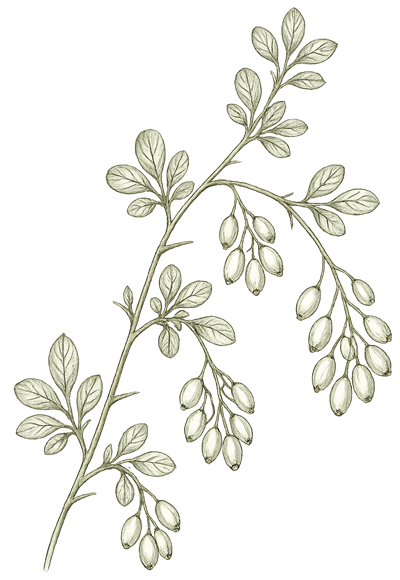
Berberine
Isoquinoline alkaloid
Black Seed Oil
Nigella sativa (seed oil)
Boswellia
Boswellia serrata (resin)
CBD
Cannabis sativa L.
CBG
Cannabis sativa L. (minor cannabinoid)
Curcumin
Curcuma longa (rhizome)
EGCG
Epigallocatechin gallate — green tea catechin
Luteolin
Chrysanthemum morifolium / Perilla frutescens
Lion's Mane
Hericium erinaceus (mushroom)
Milk Thistle
Silybum marianum (seed extract)
Turkey Tail
Trametes versicolor (mushroom)

Sourcing Guide
Formulation can materially affect exposure
Standard curcumin and Theracurmin are not interchangeable. Berberine HCl and dihydroberberine are not equivalent. The sourcing layer explains why formulation affects whether a product can deliver what the research describes — and compares products against published selection criteria.
View Sourcing Guide