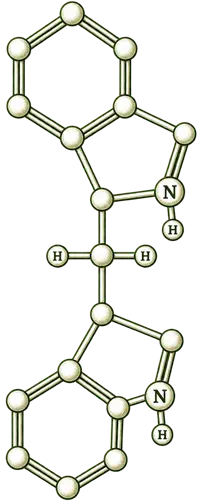
01 — Evidence
Evidence Summary
DIM is unusual for a research supplement in having been through several controlled human trials — and unusual again in that they are largely null on anticancer endpoints. What the human record reproducibly shows is a shift in estrogen metabolism, a biomarker rather than a demonstrated benefit. Animal and cell studies build a broad mechanistic case underneath, and add one striking, host-directed finding: selective protection of normal tissue from radiation.
Human
Clinical Record
Efficacy unproven; target engagement real
DIM has been through several controlled human trials. Anticancer efficacy is unproven and mostly negative, but human biological target engagement does exist.
- A 551-woman cervical trial found no significant reduction in precancer, cytology, or HPV
- Prostate tissue studies conflict — one uncontrolled study saw androgen-receptor modulation, the controlled trial saw little
- Reproducibly shifts estrogen metabolism toward 2-hydroxyestrone — a biomarker, not a demonstrated benefit
Animal
Preclinical Signal
Tumor models + selective radioprotection
In animal studies oral DIM suppressed tumors across several cancers, and — separately and unusually — protected normal tissue from radiation while leaving tumors unprotected.
- Reduced tumor growth with apoptosis and anti-blood-vessel markers in ovarian, breast, and colorectal models
- Protected rodents from lethal radiation, even when given after exposure, without shielding tumors
- Tumor effects used weight-adjusted rodent doses; radioprotection worked at achievable concentrations
In Vitro
Cell Model Data
Broad multi-pathway; concentration caveat
DIM's deepest layer is broad: it antagonizes the androgen receptor, arrests the cell cycle, and triggers apoptosis and ferroptosis across many cancer cell lines — at concentrations well above what the body reaches.
- Competitive androgen-receptor antagonism, its cleanest receptor mechanism
- Intrinsic apoptosis and AhR-linked ferroptosis across colon, gastric, lung, and liver cells
- Active concentrations sit far above achievable human blood levels
Human
Clinical Record
DIM's controlled human trials are, unusually, both numerous and predominantly negative on efficacy — though not uniformly so, and with real biological target engagement alongside. In the largest, 551 women with low-grade cervical cytology took 150 mg/day of BR-DIM or placebo for six months: precancer (CIN2+) occurred in 9% on DIM versus 12% on placebo — not a statistically significant reduction — with no significant effect on cytology or HPV clearance, and the authors concluded DIM was "unlikely to have an effect."[1] A smaller cervical pilot found lesions improved in about half of participants, but equally on DIM and placebo — "no statistically significant difference in any outcome."[2]
Continue reading — full research detail+
The prostate evidence is genuinely discordant. A randomized controlled pre-prostatectomy trial of BR-DIM up to 400 mg/day detected DIM in only 7 of 28 prostate specimens with no significant biomarker change — "without consistent or significant tissue accumulation or biomarker modulation."[5] Yet an uncontrolled single-arm study reported detectable prostatic DIM in 93% of men and androgen-receptor nuclear exclusion in 96% after oral BR-DIM[46] — direct human tissue target engagement, though from a group with a retraction history and without a control arm, so it shows biological activity, not efficacy. A phase I dose-escalation study established tolerability — a maximum tolerated dose of 300 mg twice daily, with grade-3 asymptomatic hyponatremia in 2 of 4 patients at that dose — but only 1 of 12 patients had a 50% PSA decline.[4] And one controlled prevention trial is not negative: an interim analysis of a randomized, placebo-controlled trial in high-grade prostatic intraepithelial neoplasia reported a significant improvement in a histologic index on a DIM formulation — but it enrolled only 21 of a planned 120 patients, used a surrogate endpoint, was manufacturer-affiliated, and has no published final result, so it is a weak positive signal, not evidence of prevention.[47]
What DIM does do reproducibly in people is shift estrogen metabolism toward 2-hydroxyestrone. In a randomised trial of 130 women on tamoxifen, BR-DIM raised the urinary 2-OHE1/16α-OHE1 ratio and serum SHBG — but did not change breast density, and it reduced plasma levels of tamoxifen's active metabolite endoxifen, a drug-interaction signal rather than a benefit.[6] The same 2-hydroxylation shift appears in a breast-survivor pilot (where the ratio change was not statistically significant), a thyroid pilot with tissue penetration, and an observational cohort on estradiol patches.[7,8,9] The strong lesion-regression signals sometimes attributed to "DIM" in cervical precancer and respiratory papillomatosis actually come from its dietary precursor indole-3-carbinol, a chemically distinct molecule, not DIM.[31,32]
Signal maturity: DIM's human tier is large and, unusually, well-tested. Anticancer efficacy is unproven — predominantly negative, with one weak positive interim surrogate in prostatic pre-cancer — yet human biological target engagement does exist: a reproducible estrogen-metabolism shift and, in an uncontrolled study, prostate-tissue androgen-receptor modulation. The hormone-metabolism effect carries a drug-interaction caution in the tamoxifen setting. None of this amounts to demonstrated anticancer benefit.
Animal
Preclinical Signal
In animal studies, oral DIM suppressed tumors with mechanism across several cancers — and, pointing the other way, protected the host from radiation. The two threads are separate: one is tumor-directed, the other is a selective, normal-tissue benefit.
Continue reading — full research detail+
Oral DIM has suppressed tumors in independent models. In DMBA-induced rat mammary carcinoma, oral DIM (10 mg/kg) lowered cyclin D1 and Bcl-2 and raised Bax, p53, cytochrome c and caspase-9/-3, reducing proliferation.[23] In an ovarian xenograft, oral DIM (3 mg/day) reduced tumor growth, increased apoptosis and lowered STAT3, HIF-1α and VEGF, and potentiated cisplatin.[24] In colorectal models, oral DIM suppressed a patient-derived xenograft by directly inhibiting COX1/2 and ERK1/2,[18] a DHODH-blocking DIM+5-fluorouracil combination shrank xenografts beyond either agent alone,[19] and DIM plus butyrate reduced intestinal polyps in APCmin/+ mice;[27] in a lung-cancer xenograft DIM induced ferroptosis through the AhR/NRF2/GPX4 axis.[38] These are weight-adjusted rodent doses, and the human PK cannot reach the tissue exposures they imply.
A separate, unusual finding points toward the host. DIM protected rodents against lethal total-body irradiation — up to 13 Gy, effective even when begun 24 hours after exposure — through rapid activation of the DNA-damage kinase ATM, and it mitigated radiation injury to the intestine and bone marrow via the antioxidant regulator Nrf2.[37,44,45] Decisively, DIM did not protect breast-cancer xenografts, and combination DIM plus radiotherapy enhanced tumor regression rather than blunting it.[37,43] Because this protection works at submicromolar concentrations, it is the one animal signal that plausibly translates to achievable human exposure.
Signal maturity: the tumor-suppression models are broad and oral-dosed but constrained by the exposure gap; the normal-tissue radioprotection is a robust signal (across several models and publications, though partly from overlapping groups), tumor-selective in the models tested, at achievable concentrations — but entirely preclinical, with no human radioprotection trial.
In Vitro
Cell Model Data
DIM's deepest layer is broad and multi-pathway, across prostate, breast, colon, ovarian, gastric, hepatocellular and endometrial cells — but the effective concentrations sit well above what the body reaches.
Continue reading — full research detail+
Across cancer cell lines DIM antagonizes the androgen receptor — its cleanest receptor mechanism, blocking DHT binding, receptor nuclear entry and PSA[11,12] — modulates estrogen-receptor-α and estrogen metabolism,[14,16] arrests the cell cycle at G1 and G2/M with raised p21/p27,[15,17] and induces intrinsic mitochondrial apoptosis with a caspase-8 contribution and TRAIL/DR5 sensitization.[20,22] It destabilizes HIF-1α to suppress angiogenesis,[25] reverses EMT,[26] directly inhibits COX1/2 and ERK1/2,[18] suppresses DHODH-dependent de-novo pyrimidine synthesis,[19] and induces ferroptosis through its own AhR receptor axis.[38,39] A distinctive extra thread is direct degradation of the p53-regulating oncoprotein MDM2, synergizing with MDM2-inhibitor drugs.[28]
Upstream of much of this sits DIM's signature activity: it is a low-affinity, selective ligand of the aryl hydrocarbon receptor (AhR), driving the receptor into the nucleus without productive gene transcription in breast cells and acting as a partial antagonist that blocks the strong AhR agonist dioxin.[33,34] The load-bearing caveat covers many, not all, of these: the canonical cytotoxic and cell-cycle effects need 5–40 µM — for example cell-cycle arrest and apoptosis at 0–30 µM,[17,20] TRAIL synergy at 10 µM,[22] and DHODH/5-fluorouracil synergy at 20–40 µM[19] — whereas the peak plasma DIM measured in humans is about 0.4–1 µM even at the tolerable dose ceiling,[3,4] and the investigators who measured both explicitly warned that several DIM pathways are unlikely to be engaged at achievable oral exposures.[13]
Signal maturity: the androgen-receptor, cell-cycle, apoptosis and ferroptosis mechanisms are broad and reproduced across independent labs and cancer types, several with oral-dosing animal corroboration. But the exposure gap is large, the human efficacy trials are null, and a substantial block of the older DIM signaling literature is retracted and excluded here. An autophagy signal is genuinely bidirectional (cytoprotective in prostate, growth-inhibitory in gastric), so it is treated as a caveat, not a mechanism.[41,42]
Advertisement
02 — Pathways
Pathway Interaction Profile
DIM engages several distinct biological pathways relevant to tumor behavior, grouped below by the functional role each one supports. These are direct tumor-directed mechanisms from cell and animal research, followed by a separate host-resilience finding — a selective protection of normal tissue from radiation. All of the tumor-directed evidence sits below the exposure a person can reach; the host-protective finding, unusually, does not.
DIM's Contain classification rests on reported suppression of the tumor-support programme — blood-vessel growth, the COX/PGE₂ inflammatory axis, and invasion — across several cancer types in cell studies, with oral-dosing animal corroboration in places, but at exposures the human PK cannot approach.
Block Seeding & Niche Formation
Research concerning formation of supportive pre-metastatic niches at distant sites.
Angiogenesis / VEGF / HIF-1α
In hypoxic human cancer cells, DIM has been reported to lower HIF-1α protein — promoting its proteasomal degradation and reducing its transcription — and to cut HIF-driven VEGF and other hypoxia-response genes, an effect linked to DIM binding the mitochondrial F1F0-ATPase.[25] This was corroborated in vivo: in an ovarian xenograft, oral DIM reduced HIF-1α and VEGF alongside tumor growth.[24]
COX-2 / PGE₂
After screening eleven candidate targets, DIM was identified as a direct dual COX1/2 inhibitor: it strongly suppressed prostaglandin E₂ in colon cancer cells, its growth-inhibition depended on COX1/2 expression, and oral DIM suppressed a patient-derived xenograft colon tumor in vivo.[18]
Prevent Tumor Cell Shedding
Research concerning invasion and escape from existing lesions (EMT and ECM breach).
EMT & metastatic invasion
In endometrial cancer cells, DIM has been reported to reverse estrogen-driven epithelial–mesenchymal transition — raising E-cadherin and lowering N-cadherin, Snail, MMP-9 and cathepsin D, with reduced migration and invasion — through an estrogen-receptor-dependent, anti-estrogenic route. This was shown at a DIM concentration of 0.1 µM — below the achievable human blood level — so, unlike DIM's high-concentration cytotoxic mechanisms, this anti-estrogenic action sits within reach.[26]
DIM's Starve classification rests on a single but animal-corroborated metabolic finding: it blocks the enzyme cancer cells use to build new DNA and RNA, an effect that also sensitizes them to a standard chemotherapy.
Amino Acid / Protein Access Pressure
Research concerning nitrogen availability, amino-acid access, and biomass synthesis.
Nucleotide synthesis (purines & pyrimidines)
In colorectal cancer cells, DIM (10–40 µM) has been reported to suppress de-novo pyrimidine biosynthesis — lowering the enzyme dihydroorotate dehydrogenase (DHODH) at the protein level (a down-regulation, not a demonstrated direct enzyme block), with stable-isotope tracing showing a block at the dihydroorotate-to-orotate step and reduced UTP/CTP pools — constraining proliferation. Combined with 5-fluorouracil it synergistically shrank an HCT116/DLD-1 xenograft beyond either agent alone.[19] The chemosensitization reflects DIM acting on a tumor metabolic enzyme, not a host effect.
DIM's Weaken classification is its best-supported tumor-directed theme: interference with the hormone-receptor and growth-signalling axes cancer cells rely on to proliferate, with animal corroboration in several models and, for the androgen receptor, human prostate-tissue engagement — though the cytotoxic arms need concentrations above achievable human plasma.
Expansion Suppression
Research concerning proliferation, cell-cycle progression, and the capacity of lesions to add durable mass.
Aryl Hydrocarbon Receptor (AhR) Signalling
DIM's defining upstream mechanism — one of the few it engages as a direct receptor ligand rather than a downstream marker. DIM is a low-affinity, selective AhR modulator: it drives the receptor into the nucleus but not into the productive CYP1A1 transcription a classic agonist would, and it blocks the strong agonist dioxin.[33,34] Through AhR, DIM is antiestrogenic and antitumorigenic — it down-regulated the estrogen receptor and, at 5 mg/kg, inhibited DMBA-induced mammary tumors in rats without inducing liver CYP1A1[55] — and it is chemopreventive where the toxic ligand dioxin is carcinogenic because the two activate distinct AhR outputs.[56] Selective AhR modulation by DIM also arrested gastric-cancer growth (reversed by an AhR antagonist, proving AhR-dependence)[57] and reversed EMT and invasion in esophageal squamous carcinoma via an AhR→RhoA/ROCK1→COX2/PGE₂ axis with xenograft corroboration.[58] AhR sits upstream of several other cards here — the estrogen-metabolism/ERα arm, the COX/PGE₂ axis, and the AhR/NRF2/GPX4 ferroptosis.[38] Honest caveat: AhR is a genuine "friend and foe" — tumor-promoting in some contexts — so this is the receptor DIM modulates, not a guarantee of tumor suppression.
Androgen Receptor (AR) Signalling
DIM's cleanest receptor mechanism. In prostate cancer cells it has been reported to act as a strong, competitive androgen-receptor antagonist — inhibiting DHT-stimulated growth, blocking DHT-induced PSA transcription, and preventing androgen-induced AR nuclear translocation, with no effect in AR-negative cells unless the receptor is reintroduced.[11] DIM also caused loss of AR occupancy at AR-controlled DNA-repair genes, provoking DNA damage.[12] Unusually, an uncontrolled human study reported AR nuclear exclusion in prostate tissue after oral BR-DIM (93% had detectable DIM),[46] though a randomized controlled trial found little tissue DIM and no biomarker change[5] — so the human tissue evidence is genuinely discordant, and the investigators of the cell work cautioned that some effects are unlikely to be engaged at achievable oral exposures.[13]
Estrogen Receptor (ERα/ERβ) Signalling
In estrogen-responsive breast cancer cells, DIM has been reported to down-regulate ERα messenger RNA, far more potently than its precursor.[14] Its growth-arrest action does not require the receptor, though — DIM induced p21 in both ER-positive and ER-negative breast cells.[15] Honest caveat: the effect is bidirectional — in endometrial cells DIM behaved as a ligand-independent ERα agonist,[16] and it selectively activates ERβ target genes by a ligand-independent mechanism (recruiting ERβ and a coactivator without binding the receptor).[48] So it is an ER-axis modulator whose direction depends on tissue and context, not a simple estrogen blocker.
Cell cycle checkpoints (CDK4/6–RB–E2F, G1/S, G2/M)
In colon cancer cells (0–30 µM), DIM has been reported to drive both G1 and G2/M arrest within twelve hours — lowering CDK2 activity, cyclin A/D1 and CDK4, raising the CDK inhibitors p21 and p27, and reducing Rb phosphorylation and the G2/M regulators CDC2, CDC25C and cyclin B1.[17] The p21 induction is corroborated in breast cancer cells, where it was estrogen-receptor-independent.[15]
RAS–RAF–MEK–ERK (MAPK)
DIM was identified as a direct ERK1/2 inhibitor — lowering phospho-RSK downstream of ERK — with colon-cancer growth inhibition depending on ERK1/2 (or COX1/2) expression, and oral DIM suppressing a patient-derived xenograft colon tumor in vivo.[18]
JAK/STAT (STAT3)
In ovarian cancer cells DIM has been reported to lower phospho-STAT3, block IL-6-induced STAT3 activation and reduce STAT3 nuclear translocation; forcing STAT3 expression rescued the cells from apoptosis, and oral DIM suppressed an SKOV-3 xenograft with reduced tumor STAT3.[24]
Wnt / β-catenin
In enzalutamide-resistant prostate cancer cells, DIM (combined with enzalutamide) has been reported to raise GSK3β and APC and lower β-catenin — inhibiting Wnt signalling — while also reducing the androgen receptor and its AR-V7 splice variant and reversing EMT.[40] This is a combination study entangled with the androgen-receptor mechanism above, so it is the thinnest of DIM's Weaken cards.
A further distinctive mechanism has no atlas pathway of its own: in colorectal cells DIM directly degrades MDM2, the p53-regulating oncoprotein, in a p53-independent way, synergizing with MDM2-inhibitor drugs.[28] It is noted here rather than carded, resting on a single cell study.
DIM's Attack classification rests on two distinct regulated-death programmes — intrinsic apoptosis and ferroptosis — reported across multiple cancers and corroborated in oral-dosing animal models, though at concentrations above achievable human plasma.
Direct Tumor-Directed Killing
Research concerning regulated tumour-cell death (apoptosis, ferroptosis, necroptosis).
Intrinsic apoptosis (mitochondrial / Bcl-2)
In colon cancer cells (0–30 µM), DIM has been reported to activate caspases-3/-7/-8/-9, cleave PARP, release cytochrome c and Smac from mitochondria and lower Bcl-2 — with a caspase-8 contribution making it partly extrinsic.[20] The same intrinsic programme was corroborated in vivo in rat mammary carcinoma given oral DIM,[23] in hepatocellular carcinoma via ER-stress,[21] and via TRAIL/DR5 sensitization in gastric cells.[22] In drug-resistant colon cancer, DIM restored butyrate-induced apoptosis by down-regulating survivin, reducing polyps in mice.[27]
Ferroptosis (execution / cell death)
Distinct from apoptosis, DIM has been reported to induce ferroptosis — an iron-dependent, lipid-peroxidation death. In non-small-cell lung cancer it acted through its own signature receptor, the AhR/NRF2/GPX4 axis (raising iron, ROS and lipid peroxidation while lowering GSH, NRF2 and GPX4), reversible by an AhR antagonist or a ferroptosis inhibitor and corroborated in a xenograft.[38] A separate gastric study reached ferroptosis via a BAP1–IP3R route.[39] This links a death mechanism directly to DIM's AhR activity and adds lung as a cancer type.
DIM's Protect classification is scored on host-outcome evidence. Its controlled anticancer trials established no host benefit, so the clinical Oncology Host-Status sub-scope is empty; what earns a partial score is a preclinical, tumor-selective radioprotection finding — one that, unusually for this compound, operates at concentrations the body can actually reach.
Host-Selective Redox Buffering
Studies evaluating whether normal host tissues can be protected from oxidative stress selectively.
Normal-tissue radioprotection (tumor-selective)
DIM has been reported to protect rodents against lethal total-body irradiation — up to 13 Gy, effective even when begun 24 hours after radiation — with physiologic submicromolar concentrations protecting cultured cells through rapid activation of the DNA-damage kinase ATM. Decisively, DIM did not protect breast-cancer xenografts, whose ATM was already constitutively active.[37] The selectivity has been developed further: DIM protected normal cells while combination DIM plus radiotherapy enhanced tumor regression and antitumor immunity,[43] and DIM mitigated radiation injury to the small intestine (preserving intestinal stem cells, raising Nrf2) and to the bone marrow.[44,45] Unlike DIM's high-concentration cytotoxic mechanisms, it works at concentrations humans can reach (as its receptor mechanisms also appear to) — but it is preclinical, with no human radioprotection trial, so the role is partial.
Block Seeding & Niche Formation
Research concerning formation of supportive pre-metastatic niches at distant sites.
DIM lowered HIF-1α and the blood-vessel-growth signal VEGF in cancer cells, with an oral-dose ovarian tumor model confirming reduced angiogenesis. Preclinical, above achievable blood levels.
Prevent Tumor Cell Shedding
Research concerning invasion and escape from existing lesions (EMT and ECM breach).
DIM reversed the cell changes that let tumor cells invade, restoring E-cadherin and lowering invasion markers in endometrial cancer cells through an estrogen-receptor route.
Amino Acid / Protein Access Pressure
Research concerning nitrogen availability, amino-acid access, and biomass synthesis.
Nucleotide synthesis (purines & pyrimidines)
In colorectal cancer cells, DIM lowered the enzyme that supplies new DNA and RNA building blocks; paired with a standard chemotherapy, it shrank tumors in mice beyond the drug alone.
Expansion Suppression
Research concerning proliferation, cell-cycle progression, and the capacity of lesions to add durable mass.
Aryl Hydrocarbon Receptor (AhR) Signalling
DIM's signature mechanism: it is a direct, selective modulator of the aryl hydrocarbon receptor — the upstream switch behind its anti-estrogen, cell-death and detox effects, with in-vivo antitumor evidence in breast, gastric and esophageal models. Context-dependent, and preclinical.
Androgen Receptor (AR) Signalling
DIM's cleanest mechanism: a competitive androgen-receptor blocker that shut down testosterone-driven growth and PSA in prostate cancer cells. Cell-level, at concentrations above achievable blood levels.
Cell cycle checkpoints (CDK4/6–RB–E2F, G1/S, G2/M)
DIM halted the cell-division cycle at two checkpoints in colon and breast cancer cells, raising the brakes p21 and p27 — one arm of it independent of hormone receptors.
Direct Tumor-Directed Killing
Research concerning regulated tumour-cell death (apoptosis, ferroptosis, necroptosis).
Intrinsic apoptosis (mitochondrial / Bcl-2)
DIM triggered mitochondrial cell death across colon, gastric, liver and (in oral-dosed animals) breast tumors — shifting the Bax/Bcl-2 balance and activating the caspase cascade. Preclinical, exposure-limited.
Host-Selective Redox Buffering
Studies evaluating whether normal host tissues can be protected from oxidative stress selectively.
Normal-tissue radioprotection (tumor-selective)
DIM protected healthy tissue from lethal radiation in animals — while pointedly not protecting tumors — at concentrations the body can actually reach. The strongest shape the framework shows, but preclinical only.
Advertisement
03 — Pharmacokinetics
Pharmacokinetics and Administration
How DIM moves through the body is the crux of its whole story. Crystalline DIM is barely absorbed, so the studied form is the enhanced BR-DIM — and even then, blood levels top out an order of magnitude below the concentrations its tumor-directed effects need. The one mechanism that escapes this gap is the host radioprotection, which works at levels the body actually reaches. DIM also shapes the very enzymes that clear it and many co-taken drugs.
Absorption
Crystalline DIM is poorly absorbed; the enhanced BR-DIM formulation is what makes detectable, dose-proportional blood levels possible at all. Even so, the peak level did not rise between 200 and 300 mg in a single-dose study (a twice-daily study reached higher peaks).
The Concentration Gap
DIM's tumor-directed effects appear at laboratory concentrations that are roughly 10 to 100 times higher than the peak blood level a person reaches at a tolerable dose — the central reason its lab activity has not translated to the clinic.
Clinical Dose Context
Human trials used BR-DIM from 108 mg/day up to 300 mg twice daily (the tolerated ceiling). No anticancer dose was ever established, because no efficacy trial was positive.
Formulation Effects
BR-DIM's micro-encapsulation raised peak blood DIM two- to three-fold over plain DIM. Better absorption is not the same as a larger biological effect — a point the negative human trials make concrete.
Metabolism
Oral DIM is not a stable parent compound — it is rapidly hydroxylated and conjugated, and it induces CYP3A4, CYP1A1 and P-glycoprotein, shaping the enzymes that clear it and other drugs.
Co-Dosing Considerations
Because DIM induces CYP3A4 and P-glycoprotein, it can lower the levels of co-taken medicines — and it measurably reduced a tamoxifen metabolite in a trial. Discuss timing with the care team.
Absorption
Crystalline DIM is poorly water-soluble and poorly absorbed, which is why the material actually studied in people is almost always BR-DIM (BioResponse DIM®), a micro-encapsulated formulation. In a single-ascending-dose study in healthy adults, only one subject at 50 mg had detectable plasma DIM, while 100 mg produced a mean peak plasma concentration of 32 ng/mL, 200 mg reached 104 ng/mL, and 300 mg reached 108 ng/mL — the peak did not rise from 200 to 300 mg in this single-dose study.[3] A separate twice-daily study did reach higher peaks at higher doses,[4] so this is a single-study plateau in Cmax, not a demonstrated absorption ceiling. Converted to molar units, even the highest single-dose peak is about 0.4 µM. DIM is also formed in the body from dietary indole-3-carbinol, but only a fraction of that precursor condenses to DIM, and the precursor is chemically distinct and markedly less potent — DIM was about 20-fold more potent at suppressing estrogen-receptor-α.[14]
The Concentration Gap
This is the central pharmacokinetic fact for DIM. Across the studies in the Pathway Interaction Profile above, DIM's in-vitro anticancer effects cluster at 5–40 µM, while the highest plasma DIM measured in humans is about 0.96 µM (~236 ng/mL) at the twice-daily tolerable ceiling and roughly 0.42 µM after a single tolerable dose — so the effective laboratory concentrations are roughly 10 to 100 times higher than achievable blood levels. The investigators who measured both the concentrations and the mechanisms stated plainly that several DIM pathways are unlikely to be engaged at achievable oral exposures.[13] Two honest qualifiers cut in opposite directions: plasma concentration is not the same as intratumoral exposure, and DIM's active hydroxylated metabolites complicate the picture; but for DIM the gap is reinforced by the negative human efficacy trials, so it is a strong argument specifically against the high-concentration anticancer claims. It does not, however, cover DIM's receptor and hormonal mechanisms, which act at reachable concentrations — the anti-estrogenic reversal of EMT was shown at 0.1 µM, below the human plasma peak, and an uncontrolled study found androgen-receptor modulation in human prostate tissue.
| Benchmark | Concentration | Interpretation |
|---|---|---|
| Cell-cycle arrest / apoptosis in vitro | 10–30 µM | Typical concentration for DIM's tumor-directed effects in cultured cells[17,20] |
| Plasma peak — 300 mg twice daily | ~1.0 µM | Highest human plasma DIM, measured at the tolerated dose ceiling[4] |
| Plasma peak — single tolerable dose | ~0.4 µM | Achievable peak after one 200 mg dose in healthy adults[3] |
| Radioprotection of normal cells | Submicromolar | The one mechanism demonstrated within the achievable human range[37] |
Clinical Dose Context
Human trials used BR-DIM across a wide range, but none established an anticancer dose — because none was positive. The absorption ceiling means higher milligram doses do not translate into proportionally higher plasma exposure.[3]
| Context | Dose | Result |
|---|---|---|
| Cervical cytology RCT | 150 mg/day | No effect on precancer, cytology, or HPV vs placebo[1] |
| Breast, on tamoxifen (RCT) | 150 mg twice daily | Shifted estrogen metabolism; no density change; lowered endoxifen[6] |
| Pre-prostatectomy (phase Ib) | up to 400 mg/day | DIM in only 7/28 tissue samples; no biomarker change[5] |
| Castration-resistant prostate (phase I) | 300 mg twice daily | Tolerated ceiling; 1 of 12 with a 50% PSA decline[4] |
Formulation Effects
Because native DIM is so poorly absorbed, delivery technology dominates real-world exposure. BR-DIM's micro-encapsulation is the reason detectable, dose-proportional plasma levels are achievable at all,[3,4] and an experimental DIM-loaded chitosan nanoparticle was several-fold more potent than free DIM in a rat mammary model.[23] These gains are in absorption; no formulation has been tested for an oncology outcome, and a higher plasma level is evidence of better absorption, not of a proportionally larger biological effect — a point the negative human trials make concrete.
Metabolism
Oral DIM is not a stable parent compound in people. In a controlled human study (BR-DIM 300 mg nightly for a week), plasma and urine contained, beyond parent DIM, two monohydroxylated and one dihydroxylated metabolite plus their sulfate and glucuronide conjugates — and one hydroxylated metabolite was a more potent AhR agonist than DIM itself, so the parent compound understates the active exposure.[10] Metabolism varies substantially between individuals (extensive, intermediate and slow metabolisers).[10] DIM itself is an AhR agonist that induces CYP1A1/1A2 (up to 21-fold in human colon cells[30]; 2.3–19.3-fold in human liver slices[50]) yet also directly inhibits CYP1A catalytic activity[49] — a genuinely bidirectional CYP1A effect — and, via the nuclear receptor PXR, induces CYP3A4 and the efflux transporter P-glycoprotein.[29] So DIM shapes the very enzymes that clear it and many co-administered drugs, though the net direction for CYP1A drugs is unresolved.
Co-Dosing Considerations
DIM's interaction profile is an induction profile — the opposite of many polyphenols — plus one human-demonstrated drug-level effect. Induction can lower the exposure of co-dosed drugs. The rows below are rated to the most cautious guidance the evidence supports; the tamoxifen row is the one that rests on a clinical measurement rather than a laboratory model.
Discuss whether to combine, separate, or avoid DIM and a medication with your treating oncology team or physician.
| Flag | Interaction |
|---|---|
| Caution | Tamoxifen — in a randomised trial, BR-DIM reduced plasma levels of tamoxifen's active metabolite endoxifen (and other tamoxifen metabolites). This is a human-demonstrated drug–supplement interaction directly relevant to breast-cancer patients; the trial authors noted the clinical significance is not yet established, so it sits at the strong end of Caution rather than Avoid. |
| Caution | CYP3A4 and P-glycoprotein substrates (many kinase inhibitors, some statins, tacrolimus, certain direct oral anticoagulants) — DIM induces CYP3A4 and the P-glycoprotein efflux transporter through the nuclear receptor PXR in human liver and intestinal cells, an effect its authors compared to St John's wort. Induction can lower a co-dosed drug's exposure and effect. Mechanistic human-tissue data; no clinical interaction study. |
| Monitor | CYP1A substrates (theophylline, clozapine, caffeine) — DIM's effect on CYP1A is bidirectional: it induces CYP1A1/1A2 in human cells (up to 21-fold in colon; 2.3–19.3-fold in liver slices) but also directly inhibits their catalytic activity. The net effect on CYP1A2-cleared drugs is not established in either direction, and no clinical interaction study exists. In-vitro / mechanistic only. |
Advertisement
04 — Onset & Washout
Onset and Washout
DIM's timing has an unusual wrinkle: because DIM induces the enzymes that clear drugs, its influence on co-administered medicines can outlast its own presence in the blood. Human trials all used continuous daily dosing over weeks to a year, and no repeated-dose steady-state or washout study exists.
Immediate Onset
After an oral BR-DIM dose, blood DIM rises over a few hours, but absorption saturates — the peak does not climb between 200 and 300 mg. The circulating material includes active metabolites, not just parent DIM.
Steady State
Trials used repeated daily dosing, but steady-state accumulation and continuous target engagement were not directly measured — daily use is the studied regimen, not a proven biological requirement.
Accumulated Effect
Every human trial used continuous daily dosing — from three weeks before surgery to twelve months alongside tamoxifen. No trial tested a pulsed schedule.
Dosing Pattern in Studies
Continuity-supported: every available protocol used continuous dosing. That's the regimen that's been studied — not proof that pulsed use has been tested and shown not to work.
Washout
How long DIM's influence can take to clear before it stops being a relevant factor for co-administered medications.
No clinically validated washout period exists. Because DIM induces drug-clearing enzymes, its effect on co-taken drugs can persist for days after DIM is stopped — while enzyme levels normalize — independent of how fast DIM itself leaves the blood.
Plasma Exposure and Active Metabolites
After a single oral BR-DIM dose, plasma DIM rises over a few hours to a peak of about 32–108 ng/mL across 100–300 mg, with Cmax plateauing between 200 and 300 mg in that single-dose study;[3] twice-daily dosing gives dose-proportional exposure up to a peak around 236 ng/mL at 300 mg twice daily.[4] This describes plasma concentration only. Importantly, the circulating material is not only parent DIM — a controlled human study found monohydroxylated and dihydroxylated DIM metabolites and their conjugates in plasma and urine, one of which was a more potent AhR agonist than DIM itself,[10] so the parent-compound plasma curve understates the biologically active exposure.
Steady State and Accumulation
Not formally characterised. Human trials used repeated daily dosing over weeks to a year,[1,4,6] and a one-week repeated-dose study documented parent DIM plus metabolites at nightly dosing,[10] but steady-state accumulation, trough levels, and sustained target engagement were not directly measured. What the studies establish is that daily dosing is the studied regimen — not that daily dosing is biologically necessary to sustain an effect.
Dosing Pattern in Studies
Every human trial used continuous daily dosing — six months in the cervical RCT, twelve months in the tamoxifen trial, three to four weeks before prostatectomy, two weeks before thyroidectomy.[1,5,6,8] Animal anticancer studies likewise used repeated dosing over weeks.[23,24] None tested a pulsed or single-dose schedule, so DIM is best described as studied under daily, continuous dosing for the applications it has actually been tested for — not because pulsed dosing has been shown to fail, but because it has not been tested.
Washout
No clinically validated DIM washout period has been established, and DIM presents a specific complication: it induces CYP3A4, P-glycoprotein and CYP1A1.[29,30] Enzyme induction can persist for days after the inducer is stopped, while the newly made enzyme is cleared — a timeline that is independent of DIM's own plasma half-life. A washout interval therefore cannot be calculated from DIM's plasma clearance alone, and none is recommended here. Any decision about timing DIM around chemotherapy, around tamoxifen, or around CYP3A4- or P-glycoprotein-dependent drugs belongs with the treating medical team, raised when the compound is started rather than deferred to a fixed interval.
Advertisement
05 — Safety
Safety Profile
DIM was generally well tolerated in the small-to-moderate human trials conducted, but its post-market safety record is sparse. Its most frequent trial effect is benign — harmless discoloration of the urine — with one dose-limiting signal at high doses; separately, isolated case reports describe rare serious reactions, and a fish study raises a preclinical hormonal-promotion flag.
Discolored urine — the most frequently reported trial effect (about 40% of participants in the year-long tamoxifen trial), a harmless consequence of DIM's colored metabolites.
Hyponatremia at high doses — grade-3 asymptomatic low blood sodium set the maximum tolerated dose (300 mg twice daily) in a prostate-cancer study; a serum-sodium check is reasonable at high supplemental doses.
Rare serious case reports — isolated single-case reports describe a serious hypersensitivity reaction (DRESS) and reversible eye changes (central serous chorioretinopathy) in DIM users; incidence and causality are unknown.
Pregnancy and hormones — no reproductive-safety data; because DIM shifts estrogen metabolism and induces drug-metabolising enzymes, avoidance in pregnancy or when trying to conceive is prudent unless reviewed by a clinician.
Adverse Effects in Human Trials
DIM's tolerability in the trials conducted was good. There were no BR-DIM-related adverse events up to 200 mg as a single dose in healthy adults — mild nausea, headache and one vomiting episode appeared only at 300 mg[3] — and minimal adverse events over twelve months at 150 mg twice daily in women on tamoxifen.[6] The most frequently reported effect is benign: discolored urine, reported by about 40% of DIM participants in that twelve-month trial (significantly more than placebo), a harmless consequence of DIM's colored metabolites.[6] The one dose-limiting signal is grade-3 asymptomatic hyponatremia, seen in 2 of 4 castration-resistant prostate-cancer patients at 300 mg twice daily, which set the maximum tolerated dose.[4] These are small-to-moderate trials, so they characterise common effects, not rare ones.
Rare Serious Case Reports (Post-Market)
Beyond the trials, isolated case reports describe potentially serious reactions in people taking DIM supplements. One describes drug rash with eosinophilia and systemic symptoms (DRESS), a multisystem hypersensitivity reaction, attributed to a DIM supplement.[51] Another describes reversible bilateral central serous chorioretinopathy (fluid under the retina, causing blurred vision) after two months of heavy DIM use, which resolved after stopping.[52] Each is a single case with unproven causality and unknown incidence — not evidence of population-level risk, but real signals that belong in a complete safety picture given how sparse DIM's post-market surveillance is.
No Reported Liver-Injury Signal — but Not a Clean Bill
No liver-injury signal has been reported for DIM: it has no LiverTox (NCBI Bookshelf) monograph, no published human drug-induced-liver-injury case, and the human trials recorded no hepatotoxicity.[3,4] Those trials were small and short, though, so this is best read as the absence of a signal, not a demonstration of hepatic safety at scale — and, consistent with that, Health Canada advises people with a liver disorder to consult a practitioner before using DIM, and anyone to stop if liver-related symptoms such as jaundice or dark urine appear.[54] The takeaway: no evidence that DIM harms the liver, but not a proven clean bill of hepatic health either. (This is a separate question from DIM's effect on the liver enzymes that clear other drugs — a drug-interaction matter, covered under Pharmacokinetics and Administration.)
A Preclinical Hormonal-Promotion Flag
DIM's hormonal activity is genuinely two-directional, and one preclinical result is worth stating plainly. Its effect on aromatase (the enzyme that makes estrogen) runs both ways by cell type — down in one breast-cancer line, up in another and in adrenocortical cells[35,36] — so DIM is not an aromatase inhibitor. More pointedly, in an aflatoxin-initiated rainbow-trout model, high-dose post-initiation dietary DIM increased liver-tumor incidence through an estrogen-like mechanism — the first demonstration of tumor promotion by DIM.[53] This is a fish model, at a high dose, in a carcinogen-initiated system, and is not evidence that ordinary human supplementation promotes cancer — but it is consistent with DIM's bidirectional estrogen behavior and belongs in an honest profile.
Pregnancy, Reproductive Safety and Regulatory Precautions
Dedicated human pregnancy-safety data were not identified in the literature reviewed, and the oncology trials in this profile did not enrol pregnant participants. Health Canada's natural-health-product monograph for DIM makes the precautionary stance concrete: it contraindicates use in pregnancy and breastfeeding, caps the permitted supplement dose at 200 mg/day, and — for any product delivering 6 mg/day or more — directs users to consult a practitioner before use if taking any medication, if attempting conception, or if they have low-estrogen symptoms, and to stop if low-estrogen symptoms appear (its liver-related caution is covered under "No Reported Liver-Injury Signal" above).[54] That monograph permits only general structure-function claims (antioxidant, healthy estrogen metabolism, cyclical breast-pain relief), not any cancer claim — and its 200 mg/day cap sits below several of the oncology-trial doses (for example 300 mg twice daily in the prostate phase I[4]), so trial exposures exceeded what is permitted for general supplement sale.
06 — Sourcing
Sourcing Guide
Formulation is the biggest factor in whether a DIM product delivers a measurable blood level at all — crystalline DIM is barely absorbed, while the micro-encapsulated BR-DIM form is what every human study used to reach detectable exposure. Brand quality, characterization, and how the DIM is stabilised matter more here than the raw milligram figure on the label. Our Sourcing Guide offers a curated list of products available on the retail market we found to answer those concerns.
DIM Sourcing Guide07 — Literature
References
Last reviewed: September 2026